

Connecting Rod Machining
Product Overview
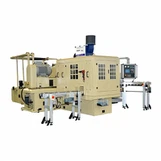
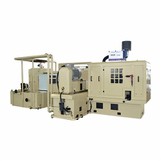
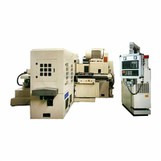
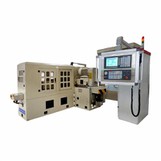
Connecting rod machining demands strict geometric control across functional interfaces to guarantee proper engine balance and bearing longevity. This equipment series is specifically designed for high-volume manufacturing environments. By utilizing dedicated workholding fixtures, high-speed cubic boron nitride (CBN) grinding wheels, and automated measurement feedback, the architecture maintains repeatable part quality across continuous multi-shift schedules.
-
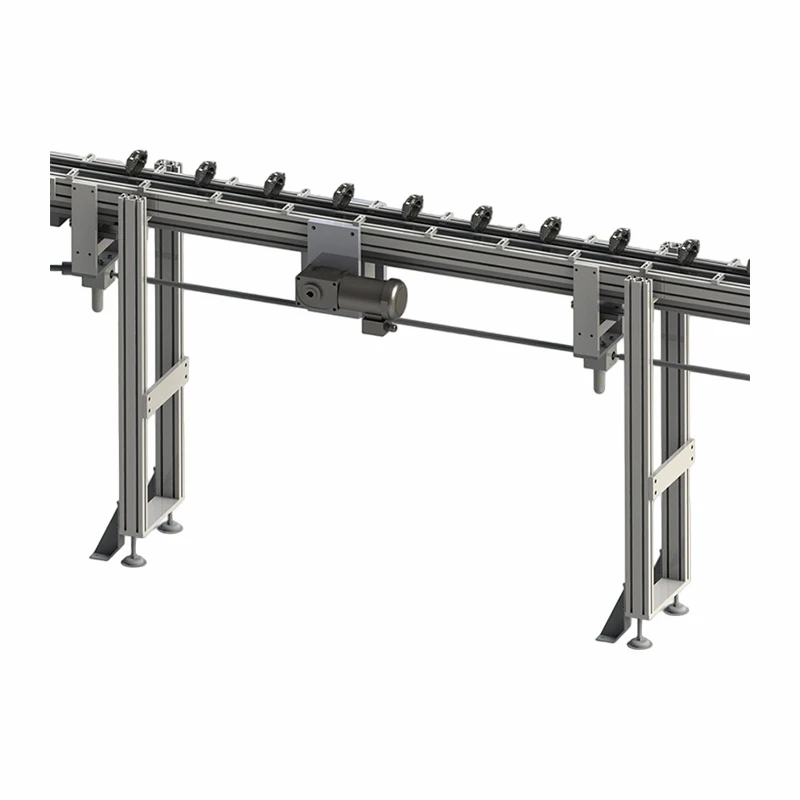
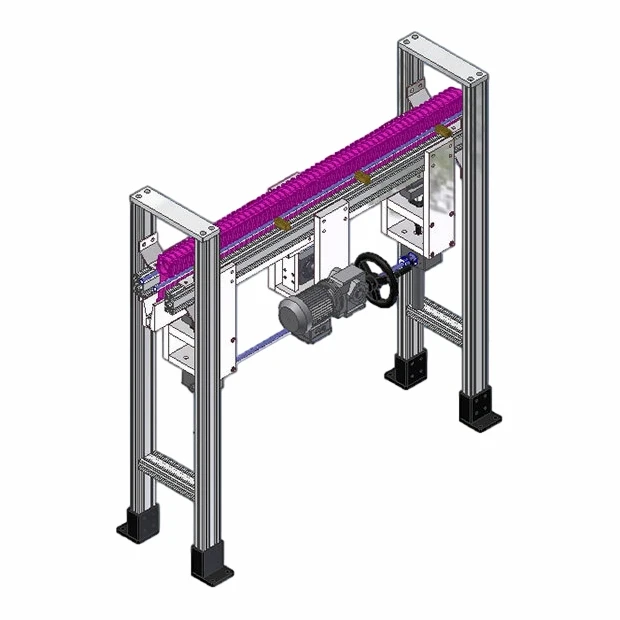
 Conveyor Belts For Connecting RodsThis type of conveyor belt is mainly used for automatic transfer of connecting rods along production lines. It requires no manual intervention, and the connecting rods move forward in a peristaltic,Add to Inquiry
-
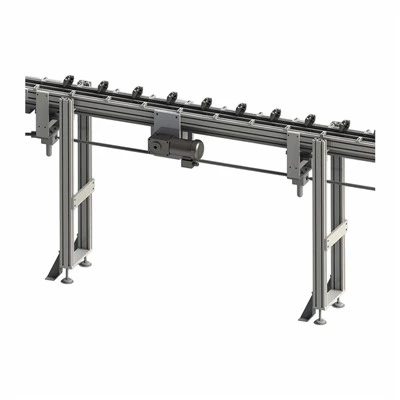 Connecting Rod Production LineWhen installing this type of conveyor belt on an actual production line, the first things to consider are floor flatness and the overall horizontal level of the belt. Although the equipment alreadyAdd to Inquiry
-
 Connecting Rod Processing LineLast year, we visited a connecting rod manufacturer whose old production line was more than ten years old. Transfer between processes relied entirely on workers pushing handcarts, and each personAdd to Inquiry
-
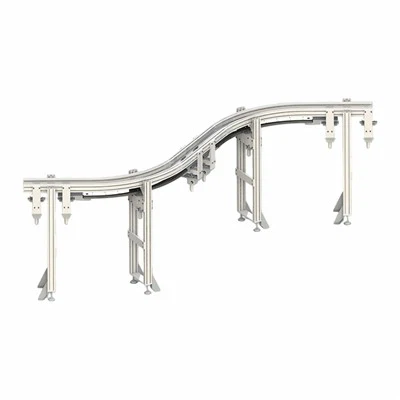 Automatic Production Line Of Connecting RodFor many connecting rod processing enterprises, a production line often produces more than one model of connecting rod. Today it might be a passenger-car connecting rod, and tomorrow another modelAdd to Inquiry
-
 Connecting Rod Processing TechnologyWhen a production line requires conveying connecting rods from one end to the other over a long distance, the layout design becomes very important. One advantage of this special conveyor belt is thatAdd to Inquiry
-
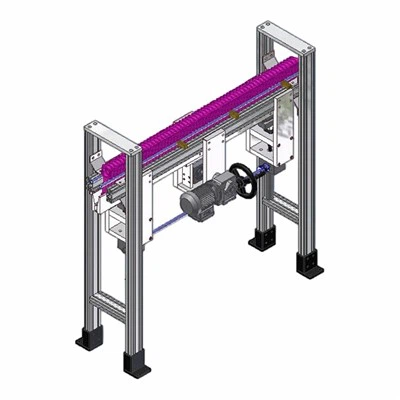 Connecting Rod Workpiece BeltIf you see this type of conveyor belt in operation for the first time, its movement may look a bit strange. The V-shaped groove keeps moving back and forth, but the connecting rods slowly advance inAdd to Inquiry
Grinding Process & Working Principle
The machining workflow targets critical functional zones of forged steel or powder metallurgy rods:
Bore Grinding (Internal Grinding)
High-frequency electro-spindles paired with abrasive wheels execute finish grinding. Constant Surface Speed (CSS) control automatically adjusts spindle rotation as the wheel wears to maintain stable cutting dynamics.
Face Grinding (Surface Grinding)
Twin-disc or vertical surface setups process the connecting rod and cap joint faces simultaneously to achieve strict flatness and parallelism benchmarks.
Workholding Principle
Hydraulic diaphragm or precision V-block fixtures clamp pre-machined datums (bolt seat faces and guide sides) to completely eliminate clamping-induced distortion.
Machine Types & Configurations
CNC Internal Grinding Machines
Dedicated to big-end and small-end bore finishing, available in single or dual-spindle configurations for sequential or parallel machining.
Twin-Spindle Surface Grinding Machines
Engineered for high-throughput synchronous processing of cap and rod joint faces.
Turnkey Robotic Cells
Integrated with articulated robots, post-process air-gaging stations, and automatic wash units for unmanned manufacturing plants.
Workpiece & Processing Capability
Material Compatibility
Forged steel, powder metallurgy, and titanium alloys.
Component Dimensions
Center-to-center distance from 100 mm to 500 mm; bore diameters from 30 mm to 150 mm.
Achieved Tolerances
|
Bore Diameter Tolerance |
+/- 0.002 mm |
|
Roundness & Cylindricity |
< 0.0015 mm |
|
Surface Roughness (Ra) |
0.2 um to 0.4 um |
|
Bore Parallelism |
< 0.005 mm per 100 mm length. |
Technical Specifications
|
Specification Parameter |
Standard Model |
Heavy-Duty Model |
|
Max. Workpiece Length |
400 mm |
650 mm |
|
Bore Grinding Range |
Dia 30 - 120 mm |
Dia 50 - 180 mm |
|
Grinding Spindle Speed |
Up to 60,000 RPM |
Up to 45,000 RPM |
|
Total Connected Power |
35 kVA |
55 kVA |
|
Machine Weight |
6,500 kg |
11,000 kg |
|
Control System Architecture |
Advanced CNC Bus Control |
Advanced CNC Bus Control |
Key Features & Machine Construction
Bed Structure
Cast iron Meehanite base optimized via finite element analysis, thermally stabilized to absorb high-frequency vibration during aggressive stock removal.

Spindle Thermal Control
Chilled liquid cooling jackets circulate temperature-regulated fluid around high-frequency motor stators, keeping thermal expansion below 0.003 mm after continuous operation.

Dressing Unit
Rotary diamond disc dressers integrated directly onto the work table provide automated profile compensation and wheel conditioning without removing the workpiece.

Coolant Management
High-pressure filtration units flush swarf instantly from the grinding zone, preventing thermal burns on finished functional surfaces.
Applications
Passenger vehicle inline and V-type engine block production lines.
Heavy-duty commercial vehicle diesel engines.
Marine propulsion and heavy locomotive internal combustion engines.
High-performance motorsport custom powertrain components.
Grinding Trials & Process Optimization
To eliminate technical risk prior to capital expenditure, processing capability is verified through structured test runs:
Sample Processing
Customer supplies raw forgings for trial machining under production-equivalent parameters.
Capability Study
Coordinate measuring machine reports and air-gage data verify process capability indices for critical dimensions.
Cycle Time Validation
Program tuning ensures adherence to strict takt time targets.
Customization & OEM
Custom Fixture Engineering
Fixtures designed to match specific engine family geometries with quick-change hydraulic clamping jaws.
Automation Interface
Mechanical and electrical integration with existing gantry loaders or articulated robots via standard industrial communication protocols.
Special Software Cycles
Proprietary macro routines developed for non-standard measurement loops or specific geometric correction algorithms.
Installation, Training & After-Sales Support

Acceptance Testing
Factory acceptance testing conducted prior to shipping; site acceptance testing supervised by resident service engineers upon installation.
Technical Training
On-site training programs covering machine operation, program editing, dressing routines, and routine maintenance for plant technicians.
Service Response
Remote diagnostics supported via secure connection; critical replacement parts dispatched efficiently from regional logistics networks.
Selection Guide
When issuing a technical request for quotation for connecting rod grinding machinery, include the following parameters to streamline proposal generation:
Part Drawings
Submit CAD models outlining critical tolerances, datum surfaces, and stock removal limits.
Material Specifications
Material hardness, forging method, and microstructural details.
Production Volume
Target annual output, shift operations, and desired takt time per component.
Facility Infrastructure
Available floor space, electrical supply specifications, and central coolant system availability.
Frequently Asked Questions
Rushan Shuangxing Machine Tool Manufacturing Co., Ltd. is one of the most reliable connecting rod machining manufacturers and suppliers in China, featured by quality products and low price. Please rest assured to wholesale durable connecting rod machining for sale here from our factory. Customized orders are welcome.
connecting rod material channel, connecting rod machining, Connecting Rod Processing Technology