

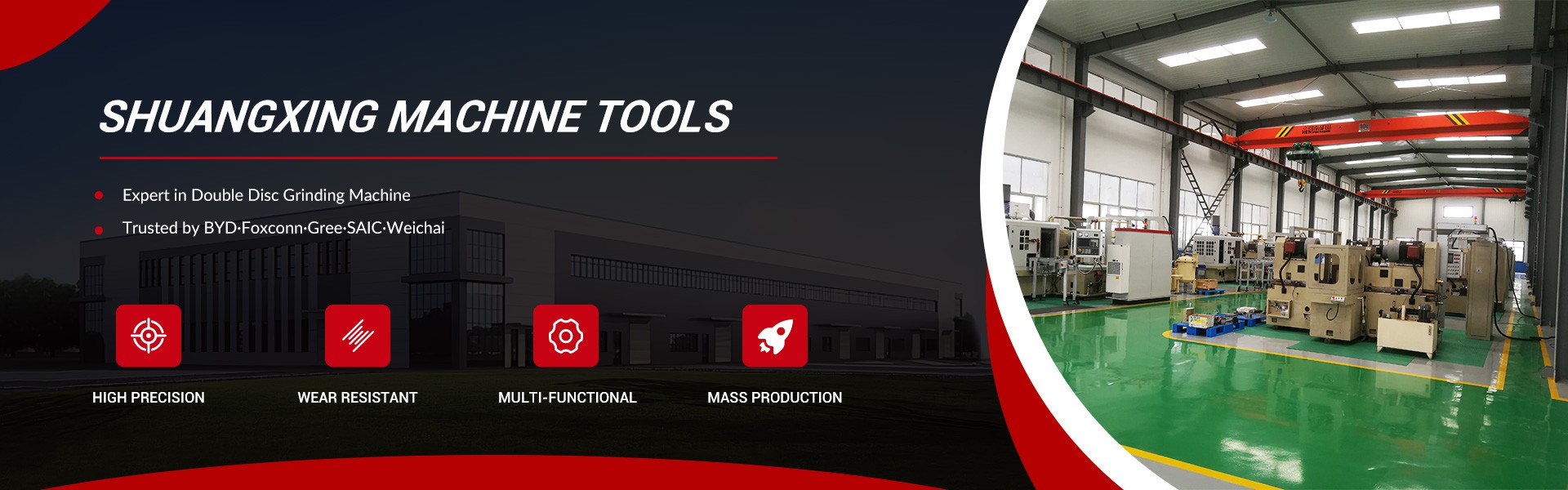
Double-end grinding machines produce high-precision products and have high production efficiency, making them widely used in many industries such as automotive, bearing, and magnetic materials. This widespread application also presents new technical requirements for their frequency converters.
High low-frequency torque is required from the frequency converter of the double-end grinding machine.
A vector frequency converter is selected, capable of delivering 150% of the rated torque at low frequencies (1~10Hz).
Fast dynamic torque response and high speed stability are required.
A vector frequency converter achieves excellent dynamic response, responding quickly to changes in load by adjusting the output torque, thus stabilizing the shaft speed.
Fast deceleration and stopping speeds are essential.
Typically, the acceleration and deceleration times of connecting rod double-end grinding machines are relatively short. Acceleration time relies on the performance of the frequency converter, while deceleration time depends on external braking resistors or braking units.
Frequency and Operation Commands
The frequency and operation commands of the inverter used on the double-end grinding machine are derived from the CNC controller. Generally, there are two types of input channels: analog input and multi-speed input, or both simultaneously, with multi-speed input taking priority. Analog input is primarily voltage-type, but current-type inputs are also possible. The inverter can acquire both types of analog inputs.


