

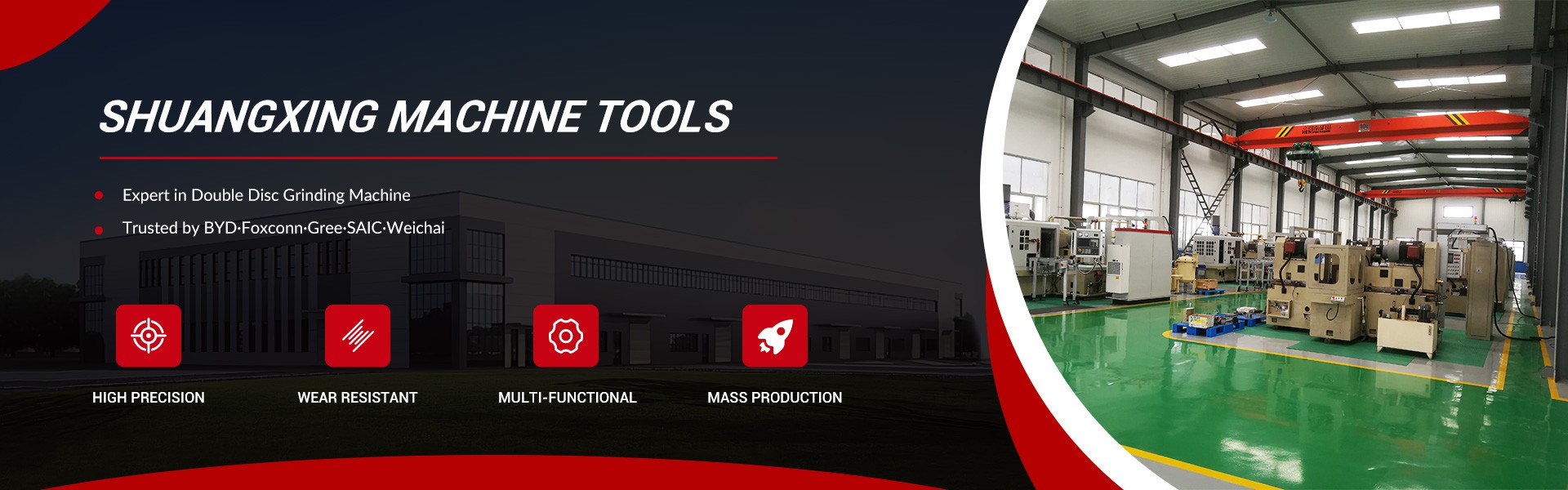
Ball and roller bearing manufacturers face two persistent production bottlenecks: limited hourly workpiece throughput and unstable flatness tolerance on bearing rings. A medium-scale European bearing plant with 12 years of bearing component production once struggled with outdated single-pass grinding units, limiting daily finished bearing output and triggering frequent dimensional rework before shipment. The production team spent three months evaluating grinding technology upgrades and finally rebuilt the full finishing production line centered on modern high-speed grinding solutions, bringing dramatic operational improvements within one month of commissioning.
The original production setup adopted old single-side grinders with slow manual feeding and low material removal efficiency. Each bearing ring required two separate grinding passes on two standalone machines, creating extra workpiece transfer time and increasing human error risks. Parallelism fluctuation often reached ±0.003mm, leading to a 7% rework rate for finished bearing rings that failed downstream assembly standards. The factory's technical director pointed out that outdated grinding hardware became the core bottleneck restricting order expansion, especially when receiving bulk export orders for automotive bearings with strict precision requirements. After comprehensive technical comparison, the factory decided to replace fragmented old equipment with an integrated continuous-feed production configuration built around a double disc grinding machine.
The upgraded grinding line integrated automatic feeding, real-time dimensional monitoring and automatic wheel dressing modules into one unified workflow. Workpieces flow continuously through the grinding zone without manual handling, cutting intermediate transfer time by more than half. Synchronized dual abrasive wheels remove stock from two sides of bearing rings simultaneously, eliminating the secondary clamping step required by single-side grinding tools. After formal line commissioning, the plant recorded a 40% rise in daily finished bearing ring output, while parallelism tolerance stabilized within ±0.0012mm. The rework rate dropped from 7% to below 1.2%, directly cutting raw material waste and overtime labor expenses for reprocessing defective parts.
Beyond output and precision gains, the new grinding system delivered long-term cost advantages for continuous shift production. Superabrasive CBN wheels equipped on the new unit extend consumable replacement cycles, reducing monthly abrasive purchase costs by nearly 32%. Built-in automatic lubrication and cooling systems cut manual maintenance frequency, freeing technicians to focus on quality inspection rather than frequent machine adjustments. For export-oriented bearing factories competing on delivery speed and consistent precision, stable high-volume grinding capacity becomes a core competitive advantage when bidding for international automotive OEM contracts.
This bearing factory's upgrade project offers replicable experience for similar precision component manufacturers stuck with obsolete grinding equipment. Many mid-sized metal part producers overlook how outdated finishing tools drag down overall line efficiency, underestimating the return on investment brought by modern synchronous double-side grinding technology. For factories planning production expansion or aiming to lower defective rates, optimizing core finishing equipment is often the highest-ROI transformation measure available. All performance data collected from the production line is continuously tracked, and the facility's engineering team regularly shares operational optimization parameters to maximize the long service life of every double disc grinding machine running in the mass production workshop.


